
Burning & grittiness
Stinging, a sandy sensation or tired eyes – often more noticeable during screen use.
LUX DRY EYE CENTER · ZURICH
Advanced diagnostics. Targeted treatment. A personalised approach to long-term ocular surface health.
Specialist consultation at Lux Augenzentrum, Glattpark
Precision before assumption
Dry eye is rarely just a lack of tears. The tear film, meibomian glands, eyelid margins, blink and ocular surface form a finely balanced system. At our specialist clinic in the Zurich area we make its function objectively visible – providing the basis for a personalised treatment concept.
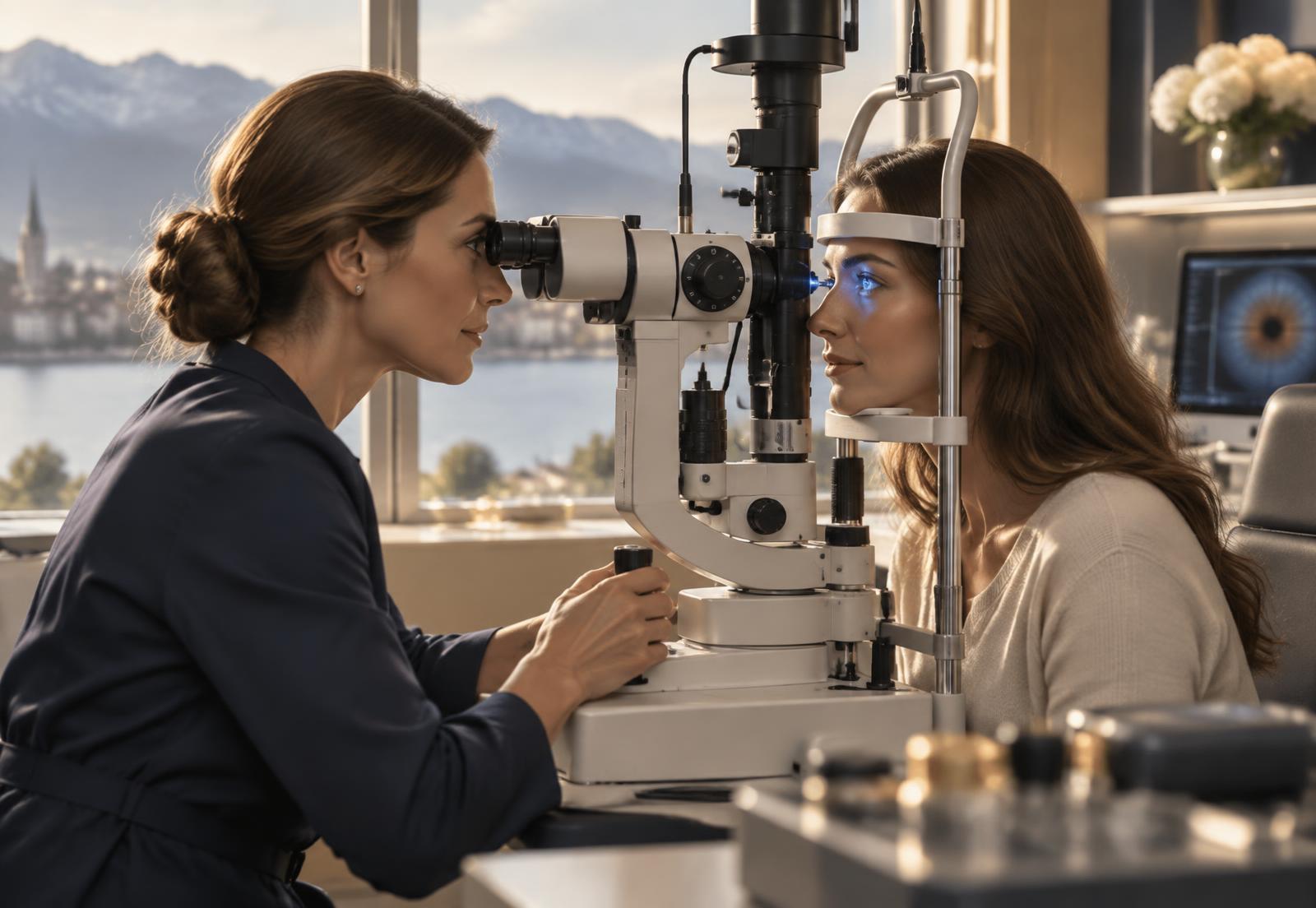
Slit lamp examination
The ophthalmologist assesses lid margins, tear film and corneal surface under the slit lamp.

Personal consultation
Calm, unhurried care and a treatment plan that fits your daily life.
Understanding dry eye
Burning, a gritty sensation or watery eyes can have different causes. Meibomian gland dysfunction is particularly common.
Stinging, a sandy sensation or tired eyes – often more noticeable during screen use.
Briefly blurred vision that changes after blinking.
A compromised ocular surface can paradoxically trigger excessive tearing.
Crusting, tender lids or recurring irritation may indicate blepharitis.
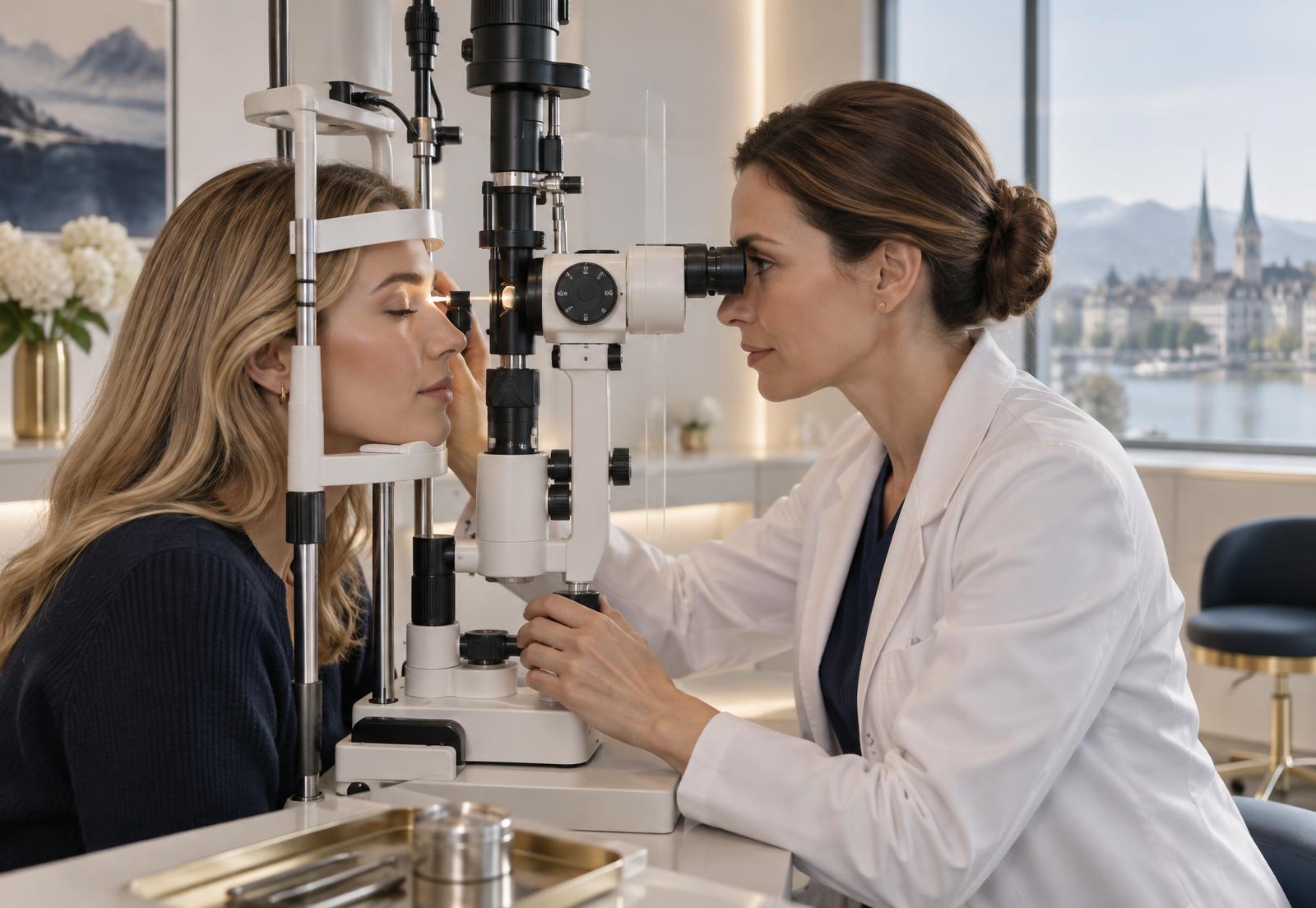
Lid margin & meibomian gland assessment
Targeted slit-lamp inspection of lid margins and meibomian gland openings.
MGD
The Meibomian glands produce the protective lipid layer of the tear film. If their openings become obstructed or the secretion changes, tears evaporate too quickly. This Meibomian Gland Dysfunction (MGD) is a frequent driver of evaporative dry eye.
Topcon TERA Dry Eye Imager
TERA combines high-resolution imaging with multimodal analysis. Its findings help us distinguish potential drivers of symptoms, document them clearly and compare changes over time.
Explore diagnostics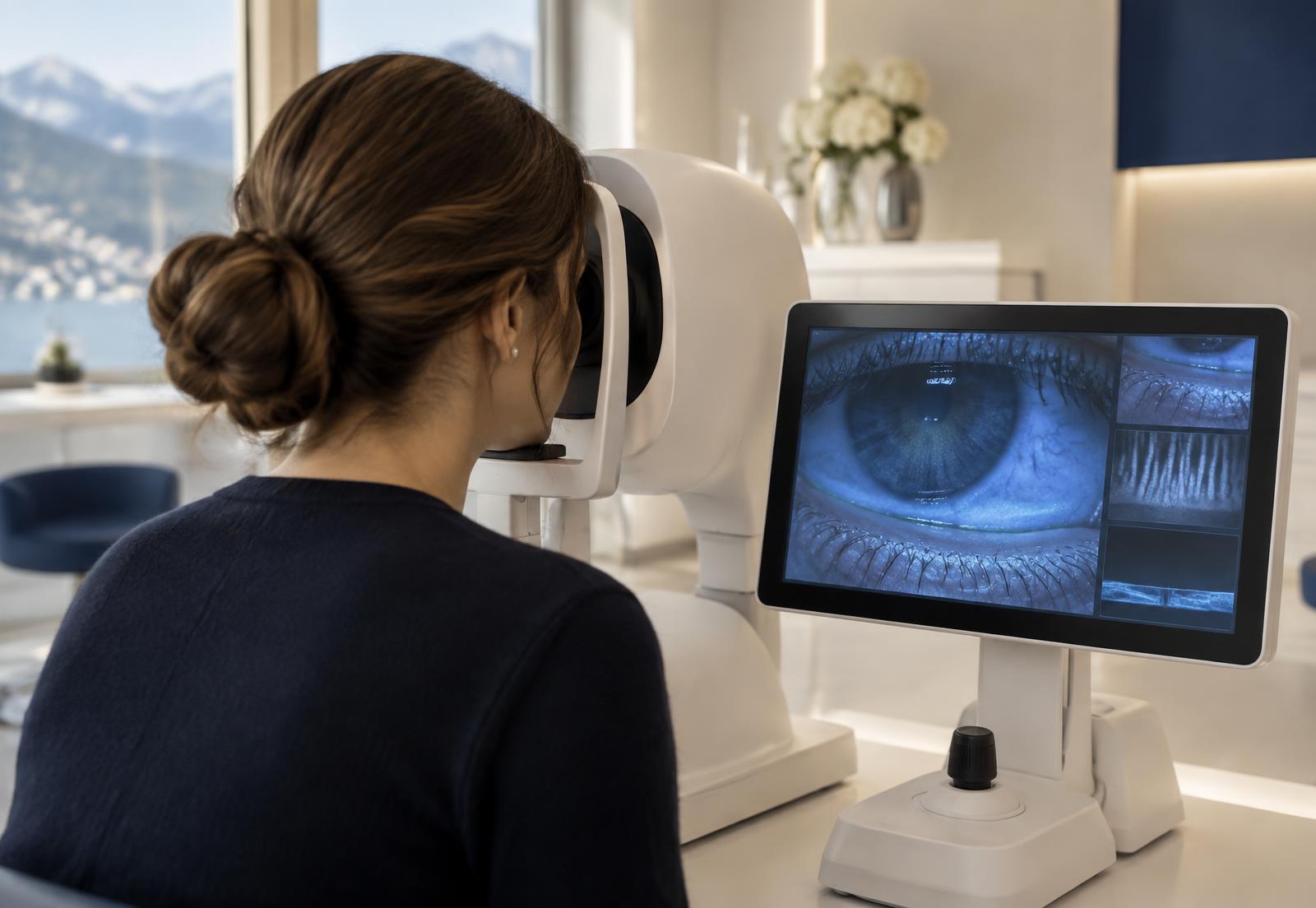
Topcon TERA analysis
Tear break-up time, meibomian glands and lid margin measured and reviewed together on screen.
Infrared visualisation of Meibomian gland structure and potential gland loss.
Non-invasive measurement of the time until the tear film first breaks up.
Measurement of tear meniscus height as an indicator of available tear volume.
Qualitative assessment of the distribution and dynamics of the protective oil layer.
Assessment of blink quality, essential for spreading the tear film evenly.
High-resolution colour imaging of the ocular surface and lid margins with standardised grading.
eye-light®
Where examination confirms a suitable indication, eye-light® can combine two complementary light-based modalities. Treatment is recommended only after individual ophthalmic assessment.
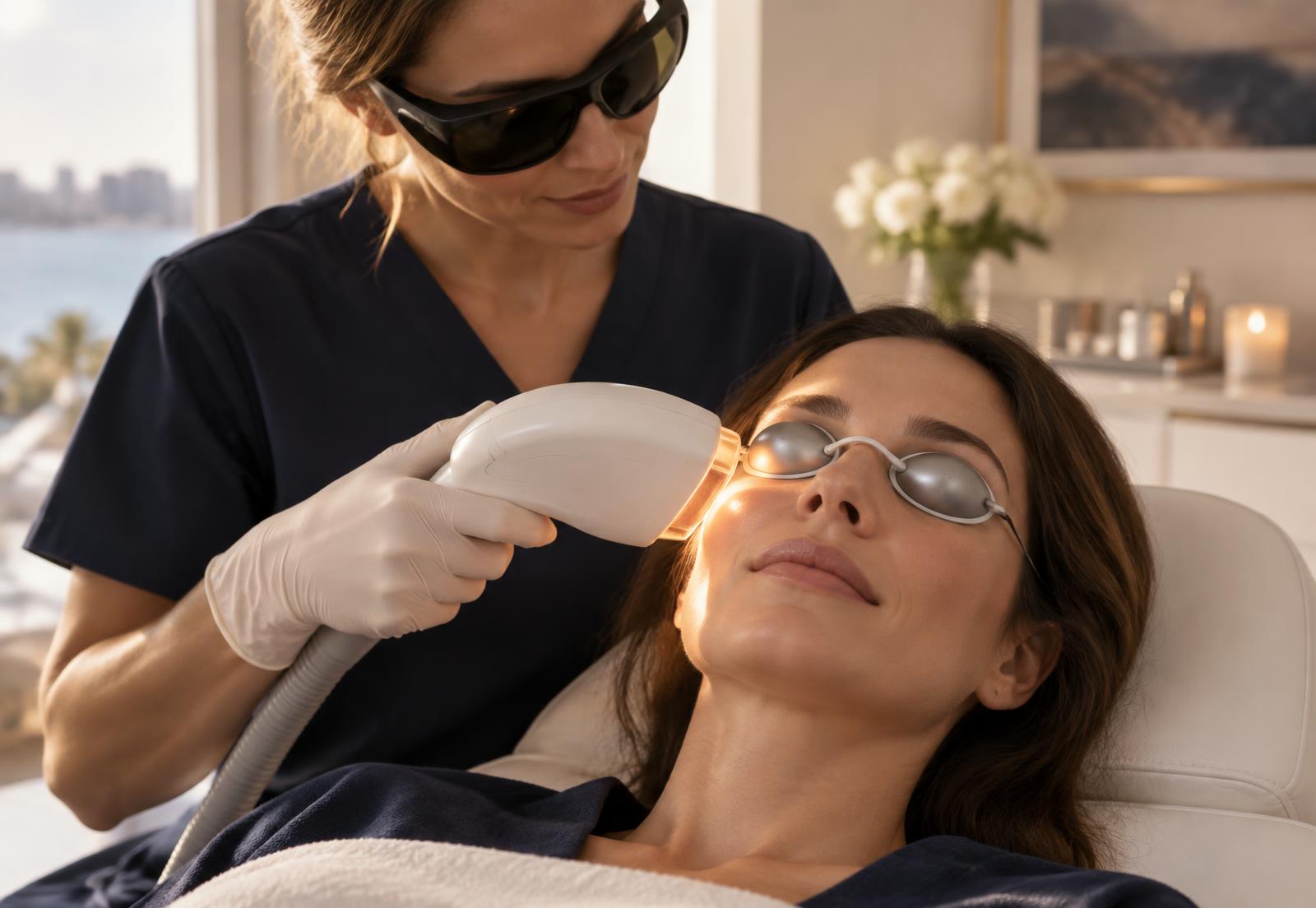
eye-light® IPL
Pulsed light gently warms the meibomian glands while protective shields cover the eyes.
01 · Intense Pulsed Light
Software-controlled polychromatic light pulses are applied beneath the eyes. The approach is designed to address dysfunctional processes associated with MGD and selected forms of eyelid-margin inflammation.
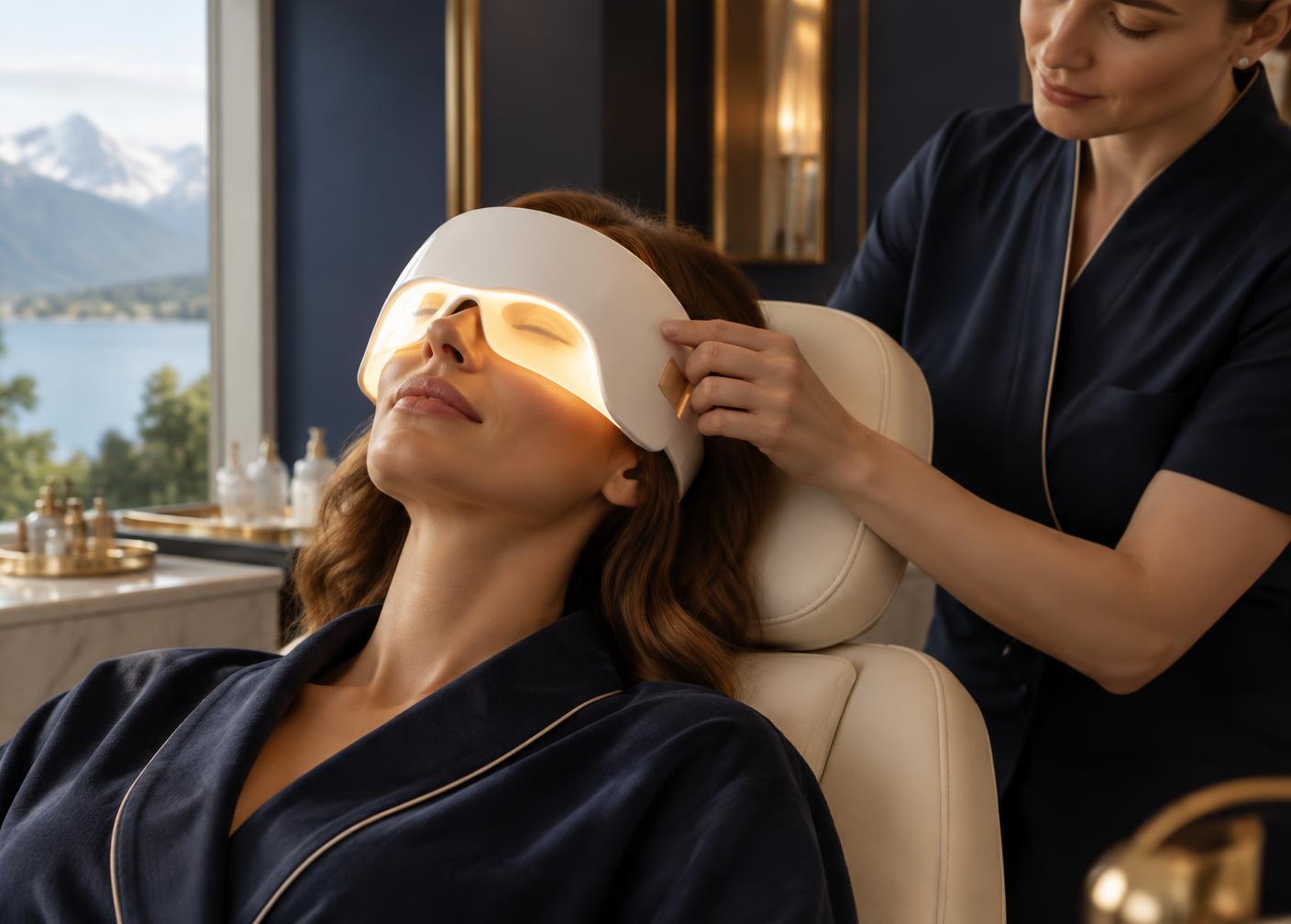
Light modulation (LLLT)
The warming light mask works comfortably and entirely touch-free on the lid area.
02 · Light Modulation
A dedicated light mask delivers low-level light to closed eyelids. This non-invasive application complements an ocular-surface treatment plan.
Light therapy is not suitable for every form of dry eye. We discuss potential benefits, process, contraindications and alternatives with you before treatment.
Discover treatmentPricing & coverage
One IPL treatment costs CHF 200. We typically recommend 4 treatments for optimal results. Basic health insurance does not cover these costs, and supplementary insurance only rarely does. The treatment is therefore primarily self-paid.
Inside the centre
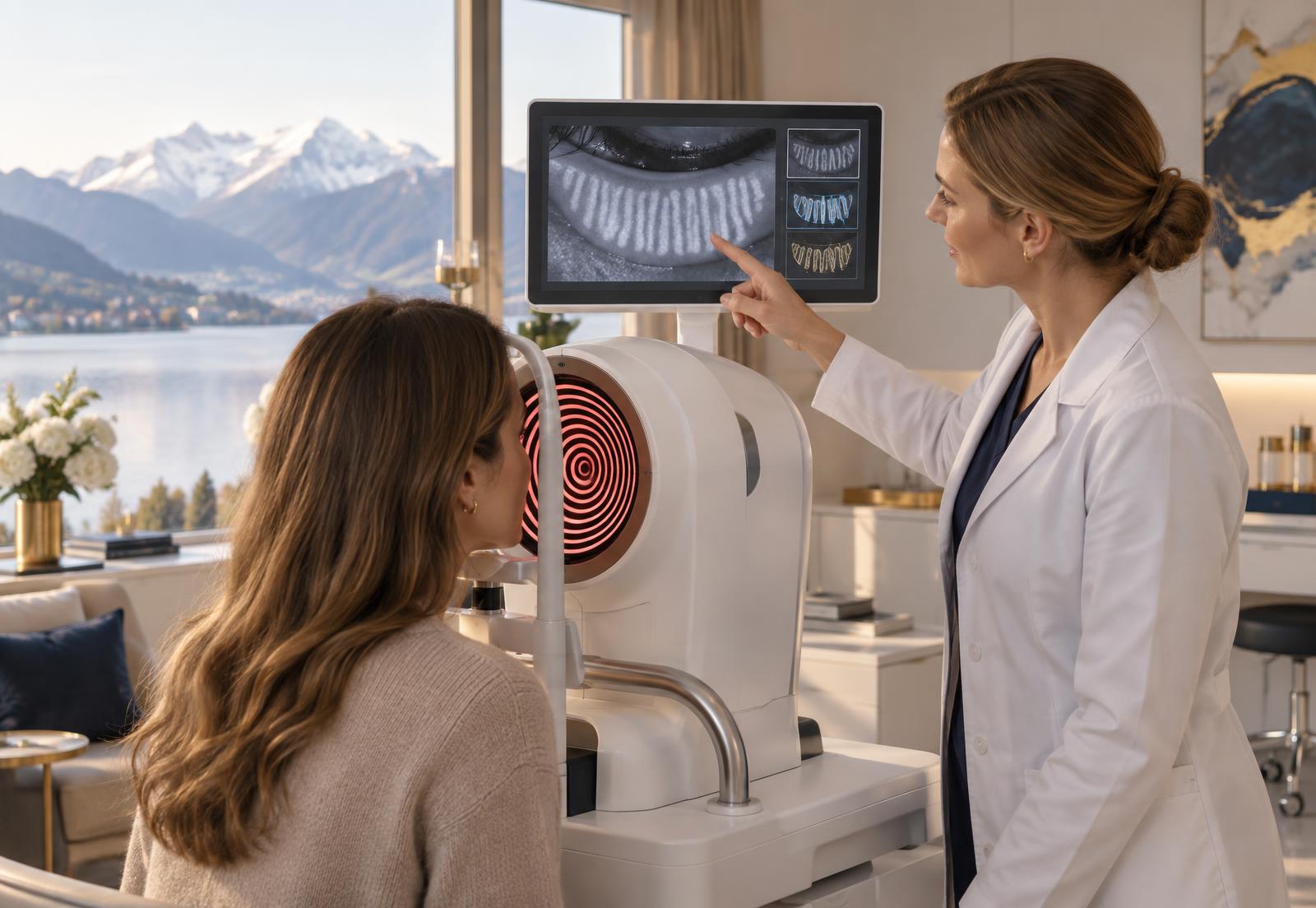
Topcon TERA analysis
Tear break-up time, meibomian glands and lid margin measured and reviewed together on screen.
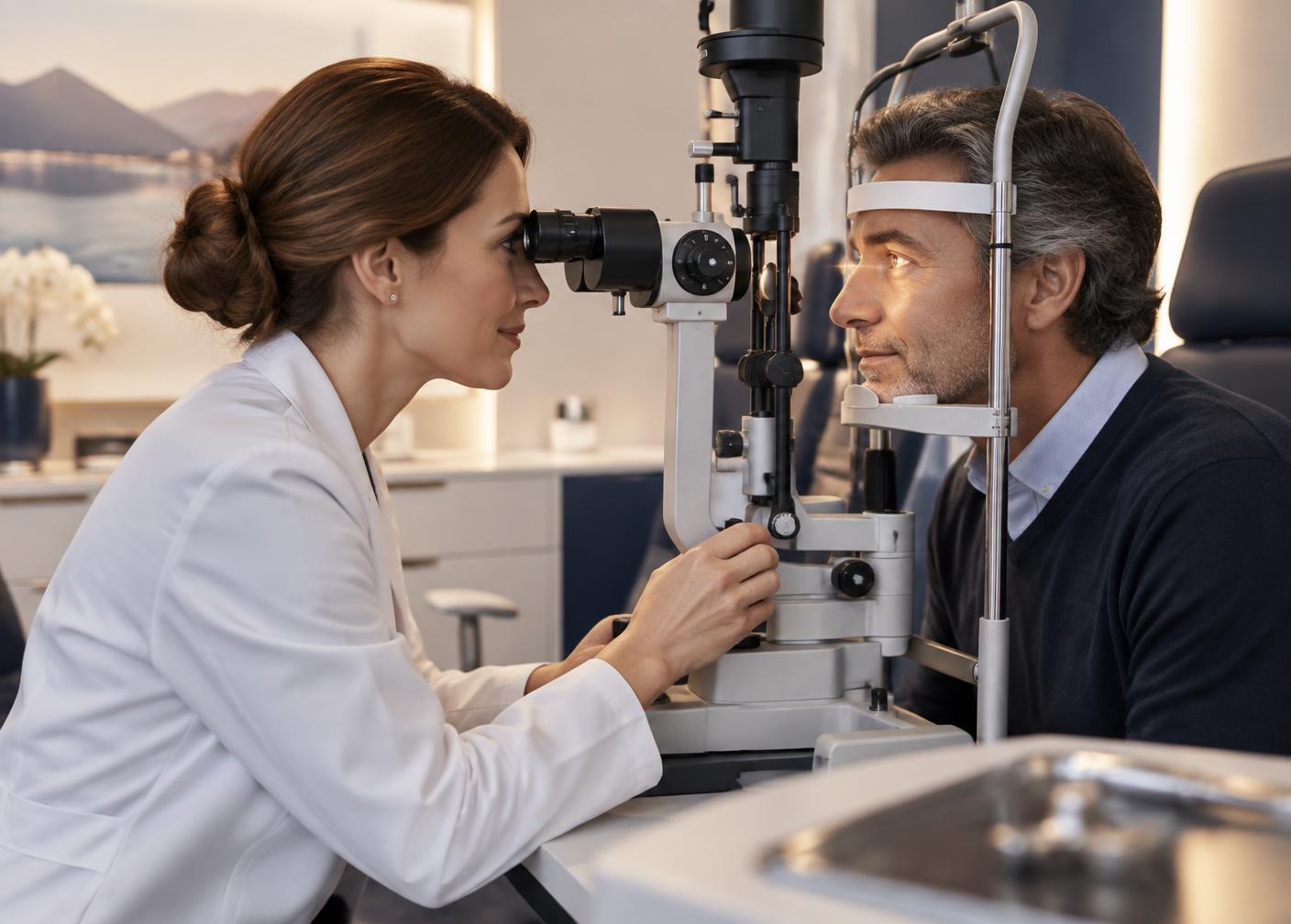
Slit lamp examination
The ophthalmologist assesses lid margins, tear film and corneal surface under the slit lamp.
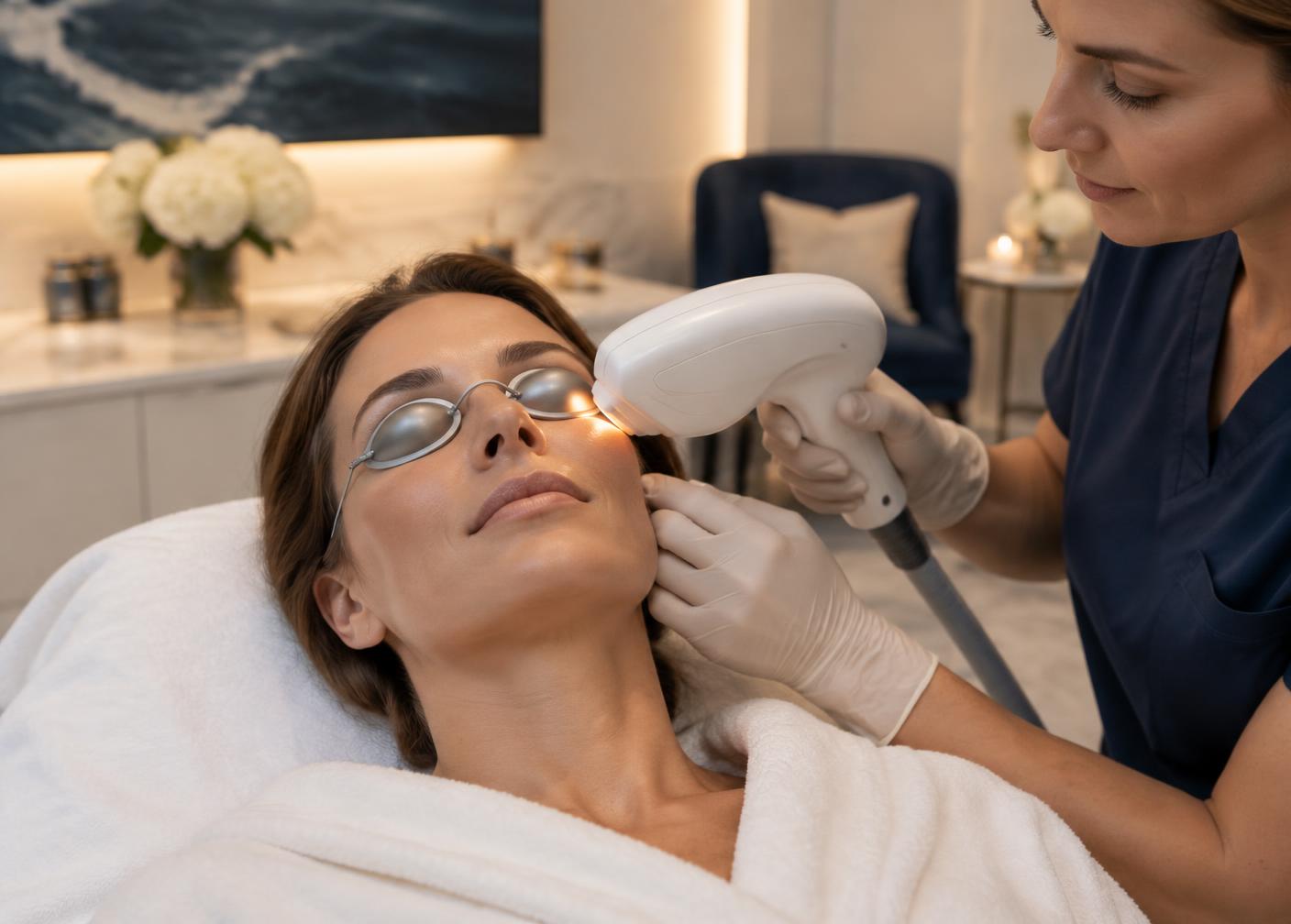
eye-light® IPL
Pulsed light gently warms the meibomian glands while protective shields cover the eyes.
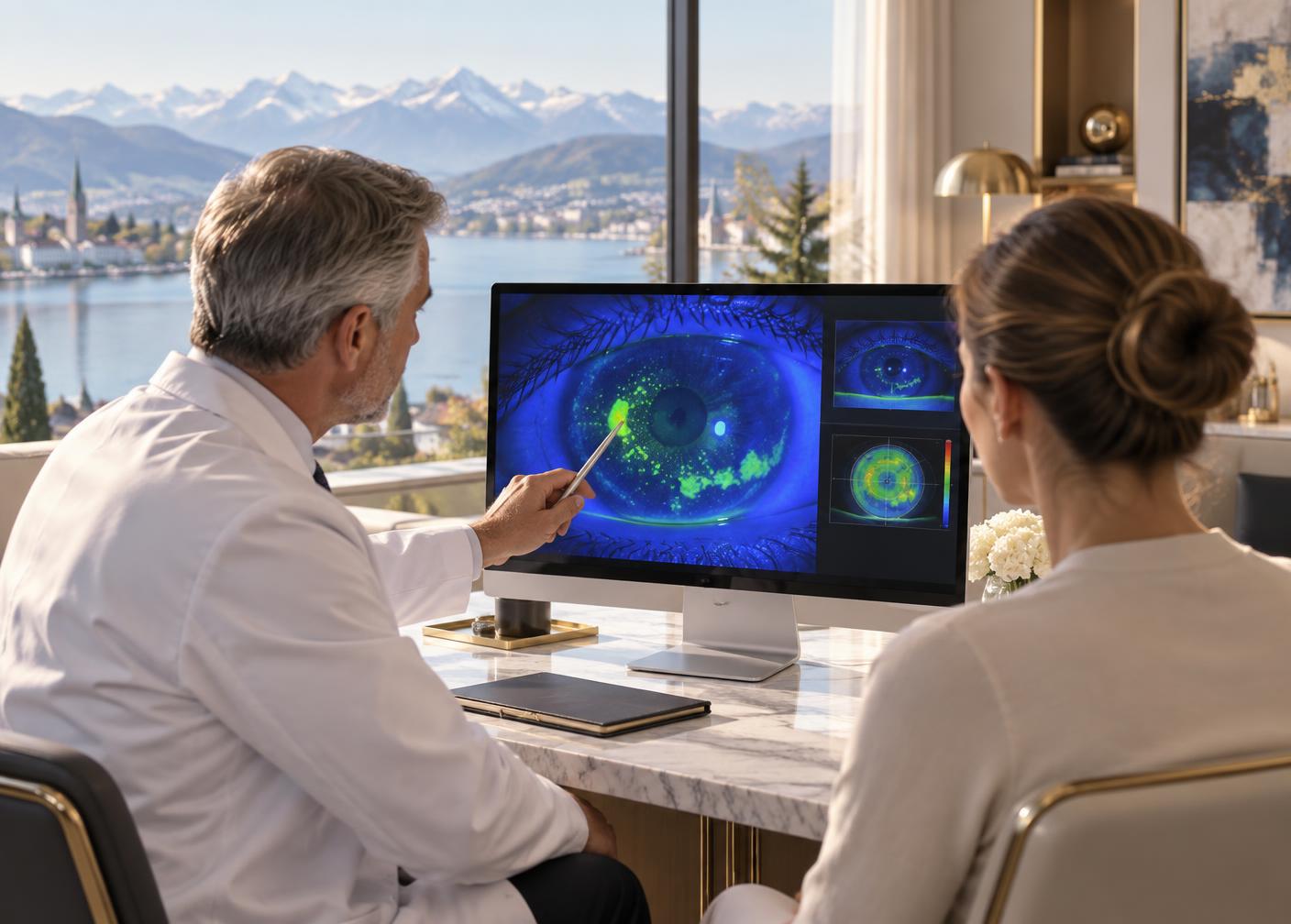
Personal consultation
Calm, unhurried care and a treatment plan that fits your daily life.
Your personal pathway
Your symptoms, habits, medical history and previous treatments provide the starting point.
We assess the tear film, Meibomian glands, eyelid margins, blink and ocular surface.
We explain your results clearly and identify the clinically relevant contributing factors.
You receive a staged concept with appropriate measures and follow-up assessments.
Frequently asked questions
Tear substitutes may relieve symptoms but do not automatically address the underlying driver. In MGD, for example, the tear film's lipid layer is central.
Core measurements such as NIBUT, meibography and tear meniscus height are non-invasive. Any additional ophthalmic examination is explained beforehand.
This depends on your findings, their severity and your response over time. We can only recommend a suitable protocol after assessment.
No. We review medical suitability, skin type, relevant medication and potential contraindications before treatment.
Many patients can continue their normal day immediately. You will receive advice tailored to your situation.
Further reading
Burning, grittiness, watery eyes: dry eye usually has several drivers at once. An overview of tear film, inflammation and environment.
The Meibomian glands supply the lipid layer of the tear film. How dysfunction develops – and how it can be documented objectively.
OPE® IPL and LLLT® photobiomodulation are combined for suitable indications. What happens during treatment – and who it is not for.
Lux Augenzentrum
Arrange an appointment for a thorough assessment and a personalised treatment recommendation.
Thurgauerstrasse 105 8152 Glattpark (Opfikon), Zurich