Why do dry eyes water?
Symptoms10 September 20265 min read
Patients are often puzzled: the eyes water, yet the diagnosis is dry eye disease. The contradiction resolves once you look at how the tear film is built.
Medically reviewed by the ophthalmic team of Lux Augenzentrum, Zurich· Last medically reviewed: 2026-09-15

Two different kinds of tears
The basal tear film is thin and even, and carries a protective lipid layer produced by the meibomian glands. It keeps the surface moist without you noticing. Reflex tears are different: a watery protective response to irritation, wind, smoke or pain.
When the basal film is unstable it breaks up between blinks. Exposed corneal nerves signal irritation, and the body answers with reflex tears that are too watery to protect the surface for long.
Situations patients recognise
Tearing in wind or cold, while driving, while reading or in the evening after long screen work are common patterns. Many people also describe burning, grittiness or briefly blurred vision that clears after blinking.
Narrowed or irritated tear drainage pathways and reduced lid tone can contribute as well, which is why lids and drainage are part of the assessment.
How we identify the cause
We measure how long the tear film stays stable (NIBUT), assess the lipid layer and tear meniscus height, image the meibomian glands with meibography, and examine lid margins, lid closure and blink quality at the slit lamp.
Only this combined picture shows whether evaporation, reduced tear production, lid-margin inflammation or a drainage problem dominates.
What helps
Treatment addresses the cause rather than the tearing itself. In meibomian gland dysfunction, lid hygiene, warming and lipid-containing tear substitutes come first; light-based treatment may be added where the indication is suitable.
If symptoms persist for weeks, increase or affect your vision, an ophthalmic examination is advisable.
This website provides general information and does not replace an individual ophthalmic examination, diagnosis or treatment. Outcomes vary between individuals. Seek urgent medical care for sudden pain, loss of vision or eye injury.
More articles
All articles
Fundamentals2 September 20266 min read
Dry Eye: Causes, Symptoms and What Actually Helps
Burning, grittiness, watery eyes: dry eye usually has several drivers at once. An overview of tear film, inflammation and environment.
Read the article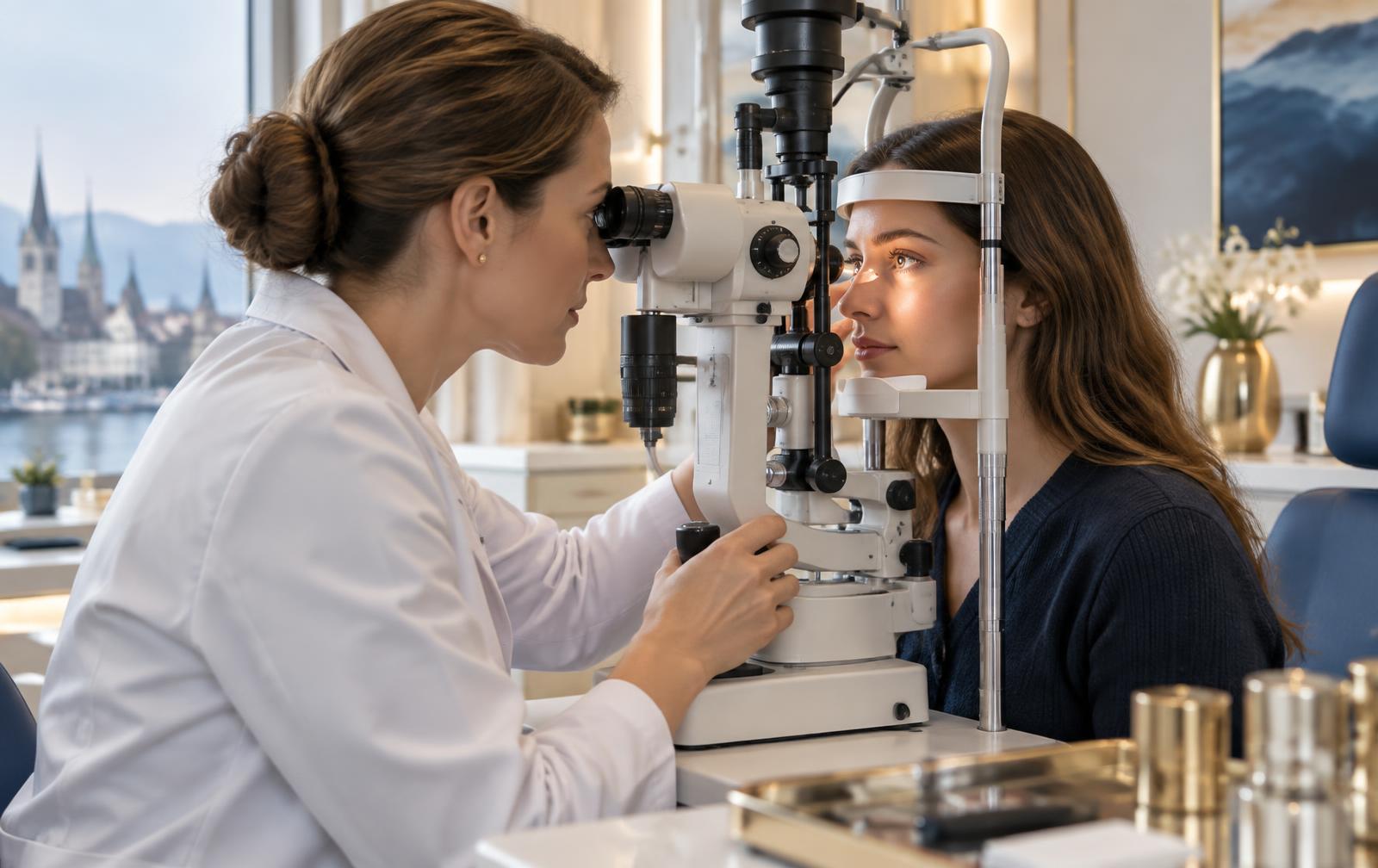
Diagnosis19 August 20265 min read
Meibomian Gland Dysfunction (MGD): The Underestimated Main Cause
The Meibomian glands supply the lipid layer of the tear film. How dysfunction develops – and how it can be documented objectively.
Read the article