Contact lenses and dry eyes
Everyday life4 September 20265 min read
A contact lens sits within the tear film – and divides it. If the film is already unstable, wearing becomes uncomfortable sooner. Often the lens is not the problem; the ocular surface is.
Medically reviewed by the ophthalmic team of Lux Augenzentrum, Zurich· Last medically reviewed: 2026-09-15

Why lenses stress the tear film
The lens splits the tear film into a pre- and post-lens layer. Both are thinner than the original film and evaporate faster. The blink can also create mechanical friction across the lens edge.
If meibomian gland dysfunction is present as well, the stabilising lipid layer is missing – dryness, burning and deposits increase.
Typical warning signs
Wearing time shortens, the lens feels rough by the afternoon, vision fluctuates, eyes redden, or you reach for drops more often. Such changes deserve attention rather than tolerance.
Irritated lid margins, recurrent styes or sticky lids in the morning additionally suggest lid involvement.
What helps day to day
Daily disposables or a material change, consistent lid hygiene, preservative-free drops, deliberate blink breaks at the screen and lens-free intervals all reduce the load. Following hygiene instructions precisely remains essential.
With persistent symptoms, seek assessment before abandoning lenses altogether – comfortable wear is often restored once the underlying cause is treated.
When to have your eyes assessed
If symptoms persist for weeks, if redness, pain or light sensitivity appear, or if your vision changes, the ocular surface should be examined specifically. With pain while a lens is in the eye: remove the lens and seek prompt assessment.
Our examination covers tear film, meibomian glands, lid margins and cornea, and shows which measures suit your situation.
This website provides general information and does not replace an individual ophthalmic examination, diagnosis or treatment. Outcomes vary between individuals. Seek urgent medical care for sudden pain, loss of vision or eye injury.
More articles
All articles
Fundamentals2 September 20266 min read
Dry Eye: Causes, Symptoms and What Actually Helps
Burning, grittiness, watery eyes: dry eye usually has several drivers at once. An overview of tear film, inflammation and environment.
Read the article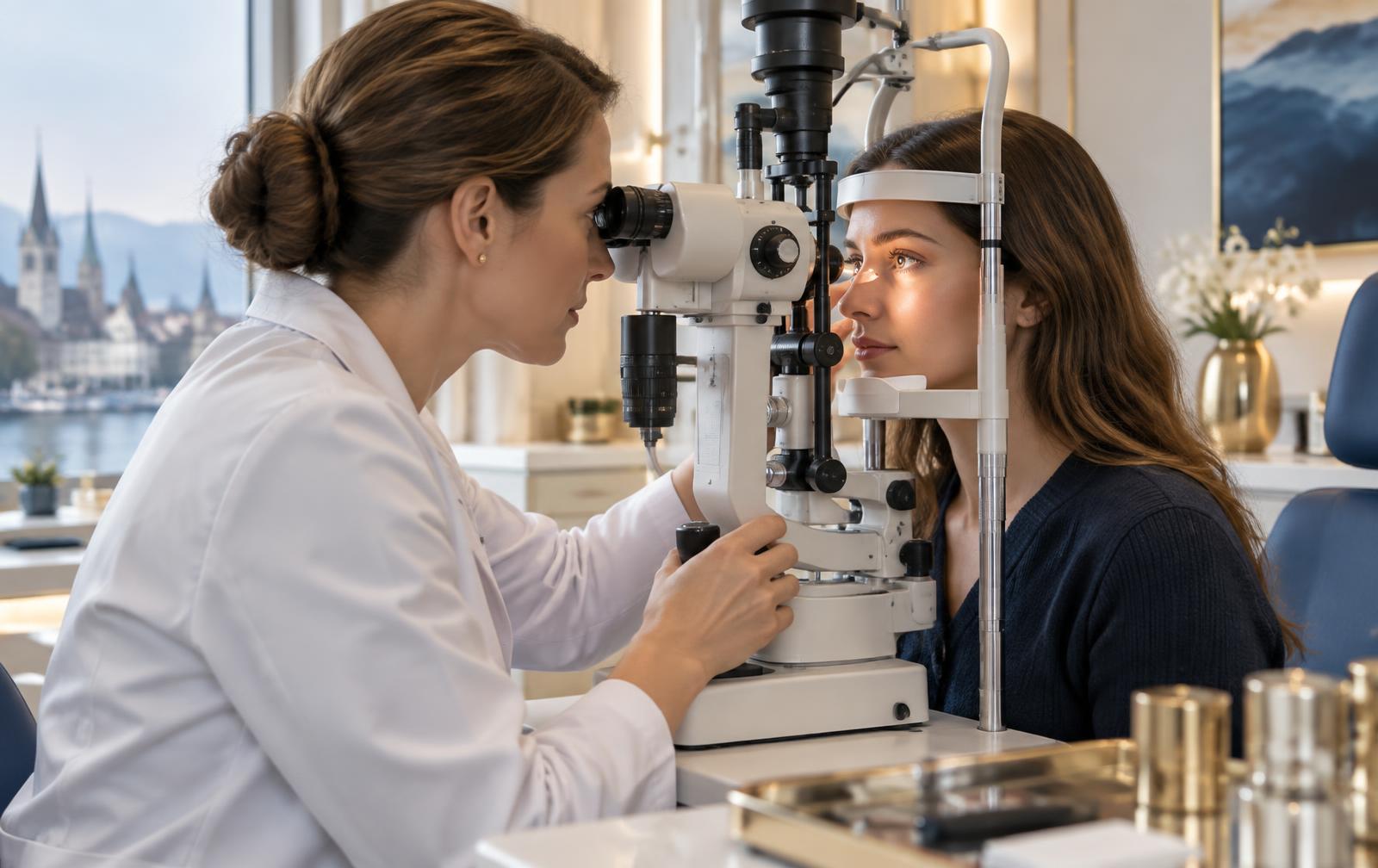
Diagnosis19 August 20265 min read
Meibomian Gland Dysfunction (MGD): The Underestimated Main Cause
The Meibomian glands supply the lipid layer of the tear film. How dysfunction develops – and how it can be documented objectively.
Read the article